About a month after I moved into my first flat, my mum called.
"Are you eating properly? And how much is it costing you to live there?"
"Um… maybe five hundred a month? Six?"
"So you don't know."
She was right. Rent and bills aside, I had no idea where the rest went. After we hung up I opened my banking app and saw a balance much lower than I expected, three weeks after payday. 'Where did it all go?' That question kicked off a six-month experiment.
What my card statement couldn't tell me
I assumed my card statement would answer it. It didn't, really. It gave me a merchant name and an amount, but anything paid through a wallet app showed up under the payment provider's name, and I couldn't remember what half of those were. Cash at the weekend market and money I'd sent friends for dinner weren't in there at all.
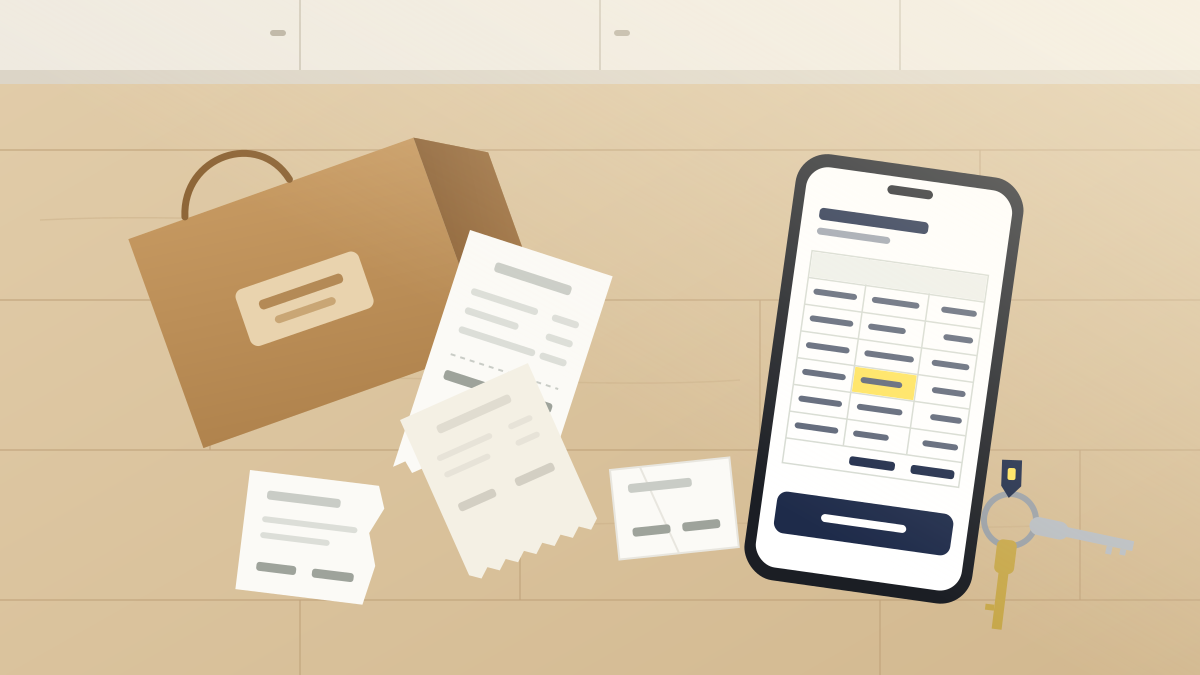
'If I keep the receipts, I'll at least know where I bought things.' So I stood a paper supermarket bag next to the shoe rack by the front door and set one rule: when I get home, every receipt in my pockets and wallet goes in the bag. Sorting could wait. That was the whole system.
First sort: 47 receipts
About six weeks in, the bag was getting heavy, so I tipped it out on the floor. 47 receipts. Crumpled ones, ones that had been wet and dried, and thermal ones that were already fading.
I started typing them into a spreadsheet, gave up after about five, and photographed them on my phone instead and added them all at once. The date, store and total came out as a table, with roughly seven yellow cells. For the faded ones I opened the photo full size and fixed the amount by hand. The couple that were truly unreadable I matched against my card statement by date. It took close to an hour, and most of that was flattening receipts and taking photos.
Spending with no receipt went in with "Add row" at the bottom of the table: rent, utilities, my phone bill, dinner money sent to friends. For takeaway orders I added screenshots of the order history. The ones that read cleanly I kept, and the rest I typed in.
The first thing the numbers told me
The first month's total made me think, 'I spent that?' Then I scrolled down and the reason was obvious. Line after line from discount shops, homeware stores and a flat-pack furniture place. A clothes airer, storage boxes, a frying pan, a bin, a bath mat. Everything I'd bought to set the place up.
So I added a Move-in setup category. Take that out, and the first month looked like every other month. Looking back, this was the most useful thing I learned: in the first few months, don't mix 'getting started' costs with 'living' costs. Mix them and you'll just scare yourself into thinking living alone is impossibly expensive.
Month three, a conversation with a friend
When I had three months sorted, I had dinner with a friend who'd also just moved out on their own.
"How much do you spend on takeaway?"
"Not much. Two or three times a week, maybe?"
"That's what I thought too. Then I counted. Fourteen times last month."
My friend put down their fork, got out their phone, scrolled through the delivery app history and said quietly, "…Nineteen." We laughed for a good while. Each order is small, so it never feels like much, but counting them changes the story.
The other thing that made me laugh was onions. I'd bought a big cheap net of them three times. Only when I saw the same supermarket and nearly the same amount repeating every two weeks did it click: 'I've been throwing more than half away and buying them again.' I was shopping like a family of four while living on my own. Now I buy two or three loose ones at the market.
Six months later, another call from Mum
With six months in the table, I worked out monthly totals. Leaving out the move-in setup, the months went up and down a bit but the average was pretty steady. Right on cue, Mum rang again.
"So how much does it cost you now?"
"About 820 a month on average, not counting rent. 340 of that is food, and 130 of the food is takeaway."
"…You wrote all that down?"
"No, I just photographed the receipts. The table does itself."
She said I should go and work in accounts, which made me laugh, because honestly all I did was drop receipts in a bag and take photos once a month. These days she sometimes sends me photos of her grocery receipts too, and I sort them for her.
If you've just moved into your first place
- Pick one spot by the front door for receipts. In your wallet they get lost, on your desk they get buried with other paper. Somewhere you pass the second you walk in lasts the longest.
- Sorting once a month is plenty. But thermal receipts start fading within weeks, so don't leave it too long. I lost a few by month two.
- Give
Move-in setupits own category for the first three months. It's the only way to see your real monthly cost of living. - Add spending with no receipt (rent, bills, money transfers) with "Add row". Leave it out and your total will look far smaller than reality.
- For anything read automatically, at least check the yellow cells and the total against the photo.
For keeping track of cash spending with no receipt, see How to track cash spending when there's no receipt. For monthly totals, see How to calculate monthly spending totals in Excel, and for receipts that have already faded, How to read a faded receipt, or get a replacement record.