About eight months into the job I went on my first work trip: three days at a supplier's factory up north, with my manager, Dan. The afternoon before we left, he said one thing.
"Hang on to your receipts. Finance are strict."
I thought, 'It's a receipt, how hard can it be?' That was where it went wrong.
Wallet, pockets, laptop bag
The trip was a blur. Meetings on the factory floor all day, dinner with Dan in the evening. I paid on my own card to claim back later, and stuffed the receipts wherever my hand went first. Between cards in my wallet, a jacket pocket, the front of my laptop bag.
We took three taxis. On one of them the driver asked, "Do you want a receipt?" and I said, "No, you're fine." I had a bag in each hand. 'It's on my card, it'll be on the statement,' I thought.
The claim, two weeks late
Back at the office I was buried in catch-up work, and it was two weeks before I sat down to file the claim. I emptied my wallet, pockets and bag and found thirteen receipts. Two were missing: that taxi, and dinner on the second night. The dinner receipt had definitely been in my jacket pocket, and the jacket had definitely been to the dry cleaner's since.
'The amounts are all on my card statement, so it'll be fine.' I attached thirteen photos to a fifteen-line claim, wrote "receipt lost" next to the two gaps, and sent it in.
The next afternoon a message came through.
"I've sent your travel claim back. We can't process the two lines without evidence. Also, your train fare on the form doesn't match the ticket, can you check?"
Two reasons. I'd expected one of them. The other was news to me.
One mistyped line
The train ticket said £49.80. My form said £48.90. I'd copied it across by hand while looking at the ticket and swapped two digits. Ninety pence. I'd never have noticed, but finance check every line against the receipt, so it jumped straight out.
'If I got that wrong, what else did I get wrong in thirteen of them?' That was a slightly sick feeling. I rebuilt the claim from scratch. This time I added all the receipt photos at once, let the date, shop and total come out as a table, and checked the two yellow cells against the photos. Nothing was copied by hand, so every other line matched its receipt exactly.
Replacing the two missing receipts
I asked the finance assistant what I could do.
"If you paid by card, a transaction record from your bank or card provider usually does the job. Send me that."
My banking app had a transaction details screen for each payment. For the restaurant it showed the merchant name, date and amount, so I screenshotted it and sent it over. The taxi was trickier: the merchant was listed as the card payment company the taxi firm used, not the taxi firm itself. The assistant said, "If the date lines up with the trip, add a note explaining it," so I wrote 'Factory to station, last day' in the notes column.
I've since heard that not every company accepts that kind of substitute. I got lucky, basically.
The resubmitted claim was approved two days later, and £214.60 landed that Friday. Exactly a month after the trip.
What Dan said, laughing
When I told Dan the story later, he laughed.
"Same thing happened to me on my first trip. That's why I photograph everything the minute I'm back in the room."
'Would've been nice to hear that before we left,' I thought, and kept it to myself. To be fair, "Hang on to your receipts" was him telling me.
What I do now
My second trip came round three months later. This time:
- Receipts go in one place only. The back slot of my wallet is the trip receipt slot. Never a pocket.
- "Do you want a receipt?" Always yes. Taxi, coffee, train station shop. You can bin it later.
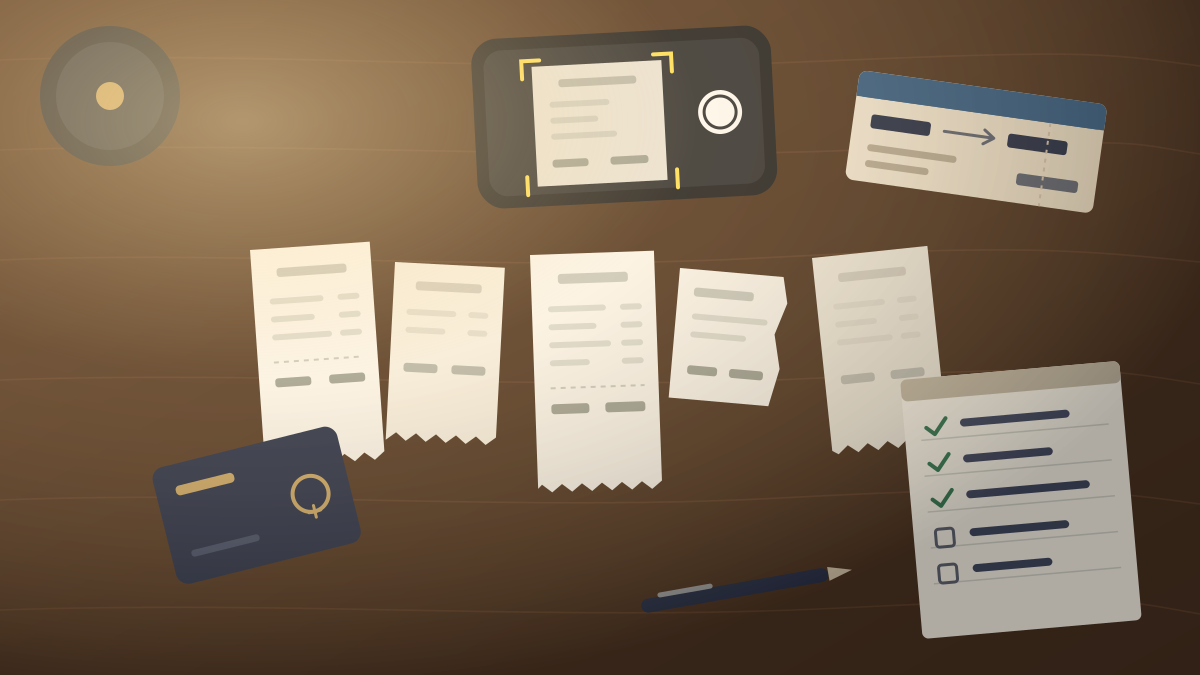
- Photograph the day's receipts as soon as you're back in the room. Spread them out on the desk and snap them one by one. Five minutes. Some are thermal paper that fades within days, so having the photos is a weight off.
- Never retype numbers into the claim. Use the table pulled from the photos, and just check the yellow cells and the total against the receipts.
- File it the week you're back. Writing the notes for odd items is much easier while you still remember them.
I filed the second claim the day after I got home and it went through first time. The finance assistant sent one line: "Nice and tidy this time." Honestly, that stuck with me more than anything from the trip itself.
For keeping track of money you've paid out until it comes back, see How to track out-of-pocket work expenses until you're reimbursed. Building the claim form itself is covered in How to make an expense report template in Excel, and if a receipt has already faded, try How to read a faded receipt, or get a replacement record.